Newsletter
Join the Community
Subscribe to our newsletter for the latest news and updates

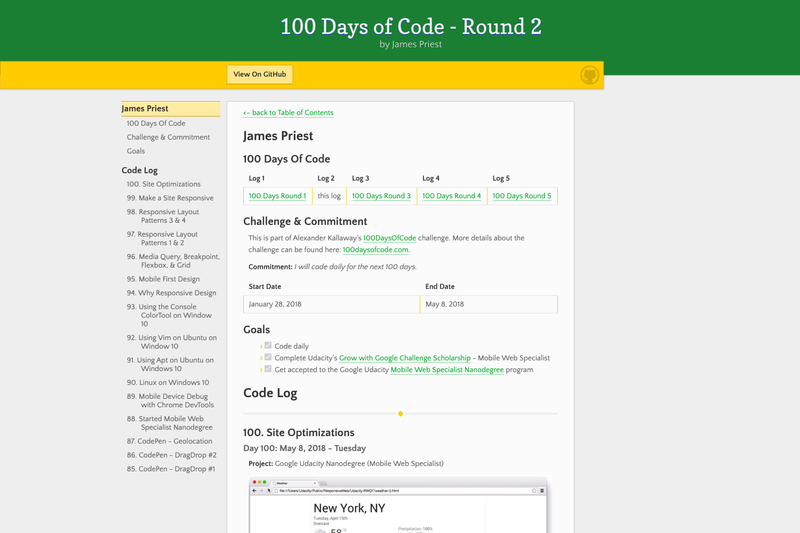
Daily code log for Round 2 of the #100DaysOfCode challenge. This uses Ruby, Jekyll, & customized template code for GitHub Pages rendering.
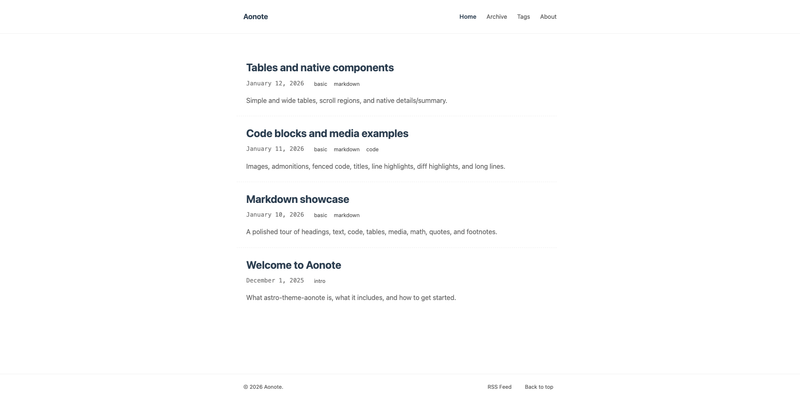
Static blog theme for Astro 6 featuring GFM, MathML math, Shiki code blocks, archive, tags, RSS/Atom, light/dark theme, and i18n.
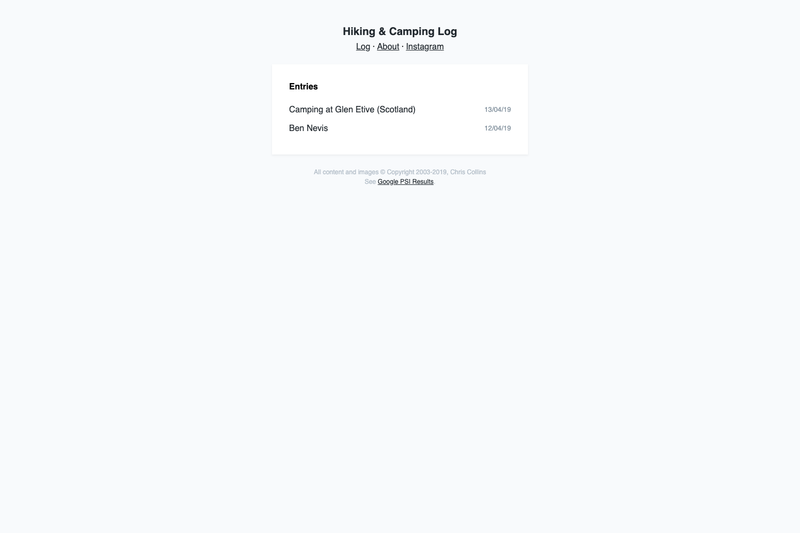
A simple journal/photo log website built on top of Eleventy (11ty).
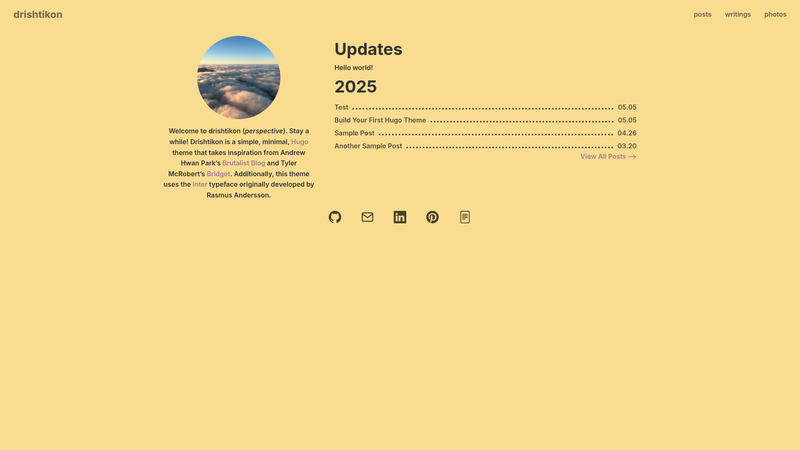
A minimal Hugo theme for blogging and portfolio websites with photo albums, writings, and KaTeX math support.
The 100 Days Of Code Log R2 is a Jekyll-based blog template for publishing a daily coding log, structured as consecutive numbered days with project, progress, and resource links.
The 100 Days Of Code Log R2 is a static site template built with Jekyll by James Priest to document his second round of the #100DaysOfCode challenge. It takes daily markdown entries as input and renders a chronological log with 100 dated sections, each containing project name, progress notes, thoughts, and links to work. The template is hosted on GitHub Pages and uses Ruby and Jekyll with customized template code.
The template is written as a Markdown file that Jekyll processes into a static HTML page. Each day is a section with a heading like "Day 99", and the author fills in the project, progress, thoughts, and links. After pushing the file to a GitHub repository, GitHub Pages rebuilds the site automatically using Jekyll, serving the latest log at the public URL.
Free — the template is publicly available on GitHub Pages, and Jekyll is an open-source static site generator that runs on any platform.
Yes, the log is hosted publicly on GitHub Pages and the source repository is accessible, so anyone can fork or copy it at no cost. Jekyll, the generator, is open source.
To edit and preview locally, you need Jekyll (Ruby-based) or you can simply edit the Markdown file on GitHub and let GitHub Pages build it automatically. A basic understanding of Git and Markdown is helpful.
The Markdown file itself can be read as plain text anywhere, but the rendered page with navigation and code formatting depends on Jekyll and GitHub Pages. You could also convert it to HTML with other tools.
The author logged 100 consecutive days from January 28, 2018 to May 8, 2018. The log includes links to five total rounds, so the setup supports multiple iterations over time.
Yes, entries contain code samples for JavaScript, SQL, bash, and Vim config, which are automatically highlighted. The log also embeds screenshots and CodePen demos, though those are stored in the repository's assets folder.