Newsletter
Join the Community
Subscribe to our newsletter for the latest news and updates

A minimal Hugo theme for blogging and portfolio websites with photo albums, writings, and KaTeX math support.
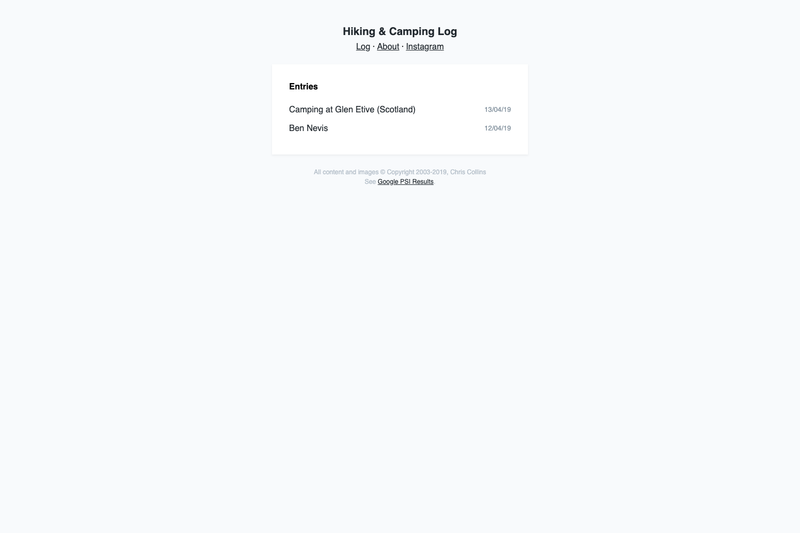
A simple journal/photo log website built on top of Eleventy (11ty).
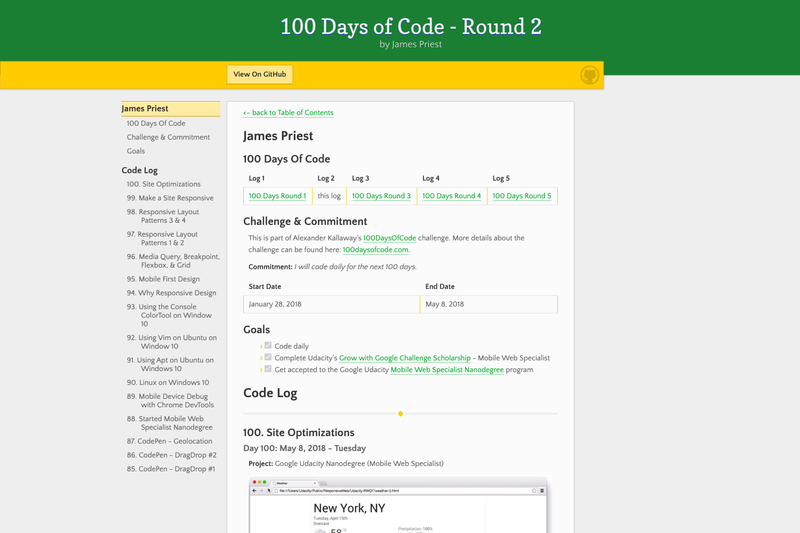
Daily code log for Round 2 of the #100DaysOfCode challenge. This uses Ruby, Jekyll, & customized template code for GitHub Pages rendering.

A Jekyll static-site blog starter with SEO, Disqus, live search, and GitHub Pages deploy automation.
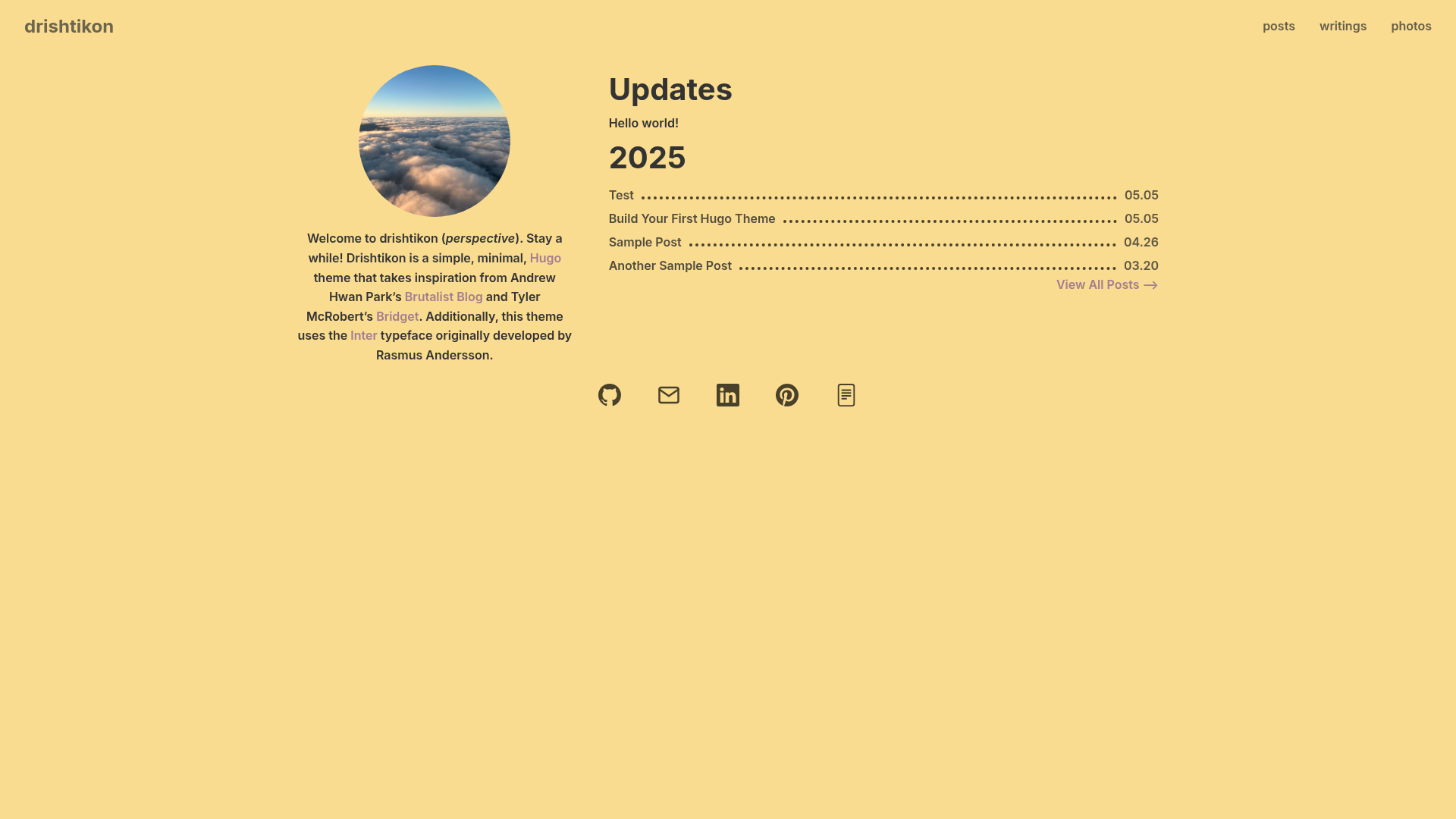
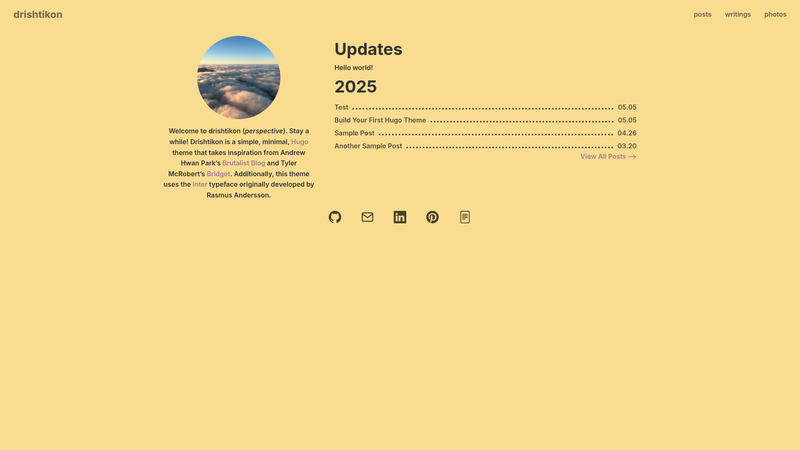
Drishtikon is a minimal Hugo theme for personal blogs and portfolio websites. It takes markdown content organized into posts, writings, and photos folders and generates a static site with a profile homepage, section listing pages, and photo albums. The theme runs on the Hugo static site generator, requires Go and Hugo for installation, and is open-sourced under the MIT License in the repository maintained by kishenarayan.
Drishtikon (Sanskrit for "perspective") is a minimal Hugo theme that builds a personal blog or portfolio from markdown files. You provide content in the posts, writings, and photos folders, and the theme outputs static pages with a profile intro, separate listings for each section, and album-based photo galleries. It is fast because Hugo generates plain HTML with no server-side dependencies.
math param to true in hugo.toml enables rendering of LaTeX-style math written with delimiters such as [ ] or $$ $$.Drishtikon operates as a standard Hugo theme: you structure your content folder into posts, writings, and photos, add a hugo.toml with the theme set to drishtikon and the desired params, then run hugo server for local preview or hugo to output static files. The theme reads the folder structure and renders each section with its own listing and detail pages.
Drishtikon is free and open source under the MIT License. There are no paid tiers or premium features described in the documentation.
Yes, the theme is released under the MIT License, so you can use it freely for personal or commercial projects, modify it, and redistribute it.
The README instructs installing both Hugo and Go, and recommends checking that they are available with go version and hugo version before installing the theme.
It supports posts, writings, and photos. Posts are simple markdown files, writings require a category value in their frontmatter, and photos live in album folders that each contain an _index.md plus individual photo markdown files.
Yes, the hugo.toml params include backgroundColor, linksColor, textColor, fontFamily, tableHeaderColor, tableContentColor, tableRowHoverColor, and writingCardBackground, all of which can be set directly.
Set math = true in the hugo.toml params, then use KaTeX delimiters such as [ ] for block math or ( ) for inline math in your markdown content.