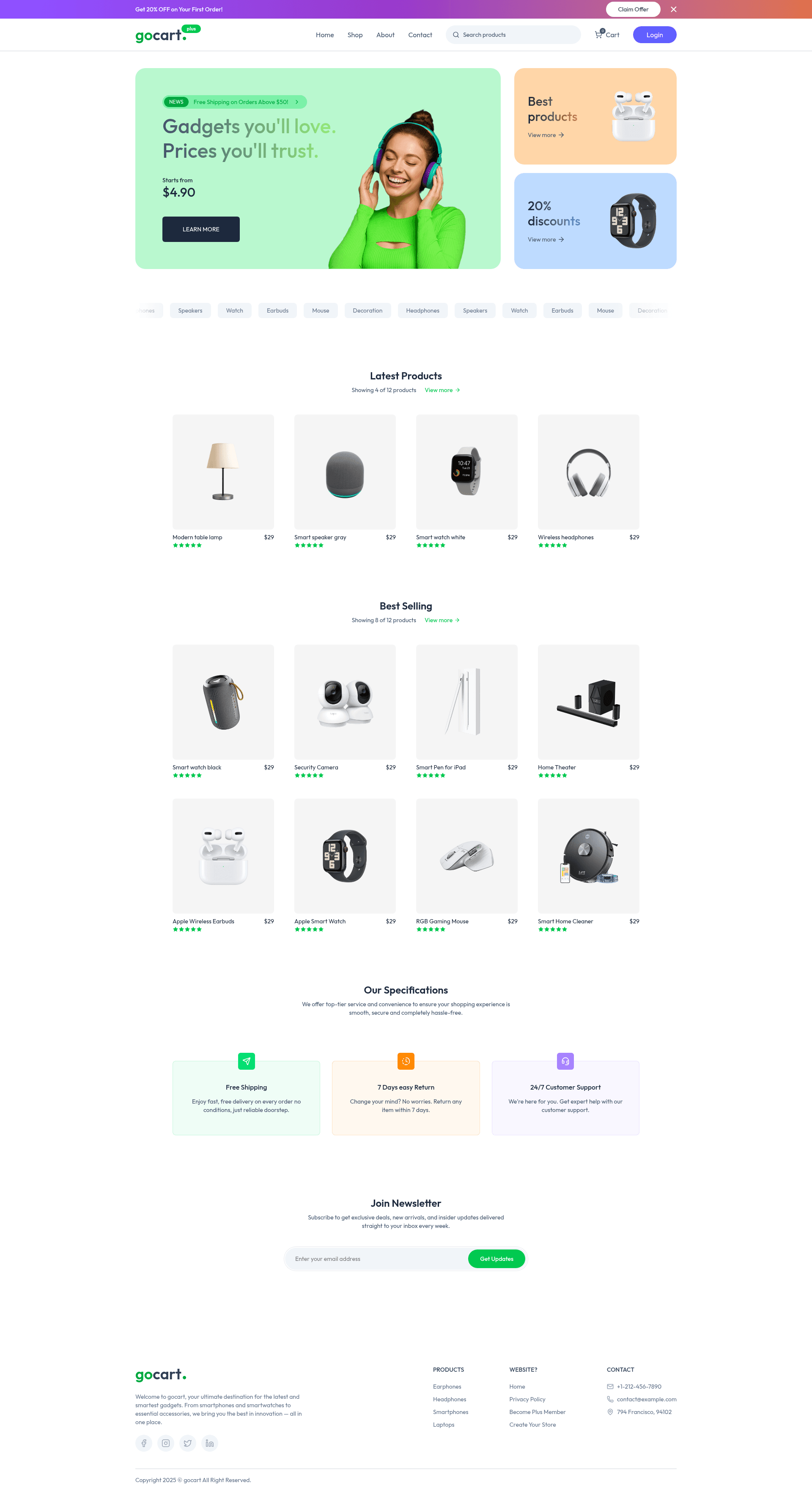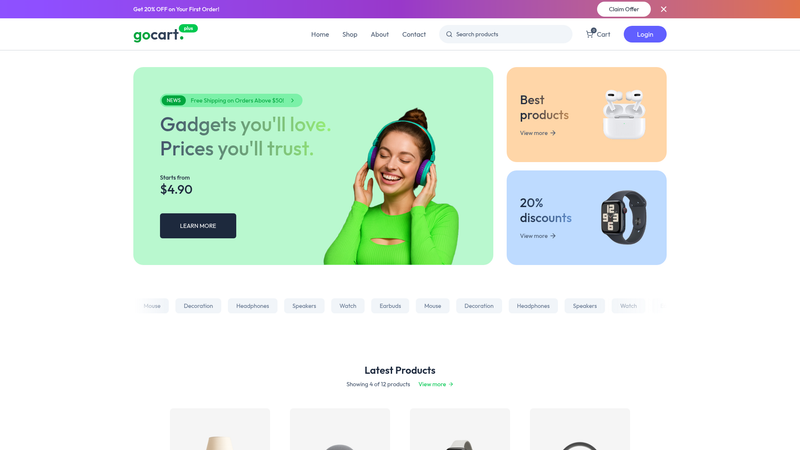
GoCart is an open-source multi-vendor e-commerce platform template built with Next.js and Tailwind CSS, designed to help developers launch scalable online stores and marketplaces.
What is GoCart?
GoCart is a free and open-source e-commerce template that provides a multi-vendor architecture, allowing multiple sellers to register, manage products, and sell on a single platform. It includes a customer-facing storefront, vendor dashboards, and an admin panel for platform oversight. The project is maintained on GitHub under the MIT License.
Key Features
- Multi-Vendor Architecture — Multiple vendors can register, manage their own products, and sell on a single platform, enabling marketplace-style operations.
- Customer-Facing Storefront — A responsive, modern UI for customers to browse products and complete purchases.
- Vendor Dashboards — Dedicated dashboards for vendors to manage products, view sales analytics, and track orders.
- Admin Panel — A platform-administrator dashboard to oversee vendors, products, and commission settings.
- Next.js Framework — Built on the React-based Next.js framework, supporting server-side rendering and static site generation.
- Tailwind CSS Styling — Utility-first CSS styling for rapid customization and a consistent responsive layout.
- Redux Toolkit State Management — Centralized state handling for complex e-commerce interactions.
- Lucide React Icons — Lightweight, consistent icon set integrated into the UI components.
Who should use GoCart?
Startup founders launching a multi-vendor marketplace who need a pre-built platform for faster product validation. Full-stack developers looking for a modern Next.js codebase to extend with custom features. Agencies building custom e-commerce solutions who want a responsive foundation with admin and vendor interfaces.
What can you do with GoCart?
- Launch a marketplace: Set up a multi-vendor store where independent sellers can register and list products, with admins managing commissions.
- Customize the storefront: Edit the public-facing pages by modifying
app/(public)/page.jsto adjust the layout and branding. - Manage vendor operations: Give vendors a dashboard where they can track sales, handle orders, and update product listings.
- Build on a modern stack: Extend the Next.js and Tailwind CSS codebase with additional features like payments, shipping, and analytics integrations.
How does GoCart work?
GoCart runs as a Next.js project. After installing dependencies with npm install, you start the development server with npm run dev and open http://localhost:3000. The main public page lives at app/(public)/page.js, and edits auto-reload. The project also uses next/font to automatically load the Outfit font from Vercel.
FAQ
Is GoCart free?
Yes, GoCart is free and open-source, licensed under the MIT License. You can use it for commercial projects without paying licensing fees, and contributions are welcome.
What tech stack does GoCart use?
GoCart uses Next.js as the framework, Tailwind CSS for styling, Redux Toolkit for state management, and Lucide React for icons. It runs on Node.js and can be deployed to any hosting service that supports Next.js.
How do I start a project with GoCart?
Clone the repository, run npm install to install dependencies, then npm run dev to start the development server at localhost:3000. You can modify the public pages in the app/(public) directory.
Does GoCart support multiple vendors?
Yes, GoCart is built as a multi-vendor platform. It includes vendor registration, vendor-specific product management, sales dashboards, and an admin panel to oversee all vendors and commissions.
Can I contribute to GoCart?
Yes, the project welcomes pull requests. Check the CONTRIBUTING.md file in the repository for guidelines, and report issues via the GitHub issues page.