Newsletter
Join the Community
Subscribe to our newsletter for the latest news and updates

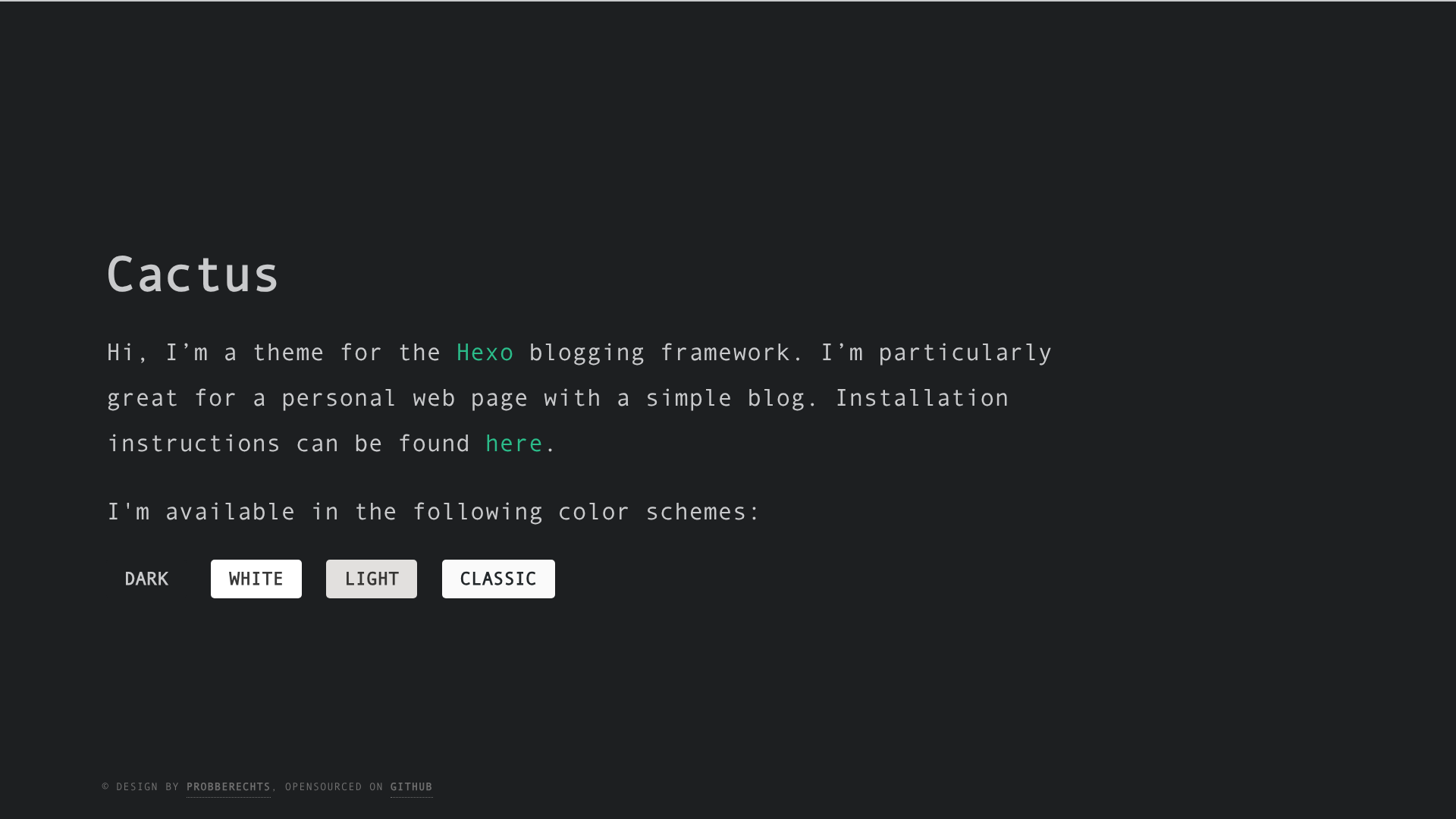
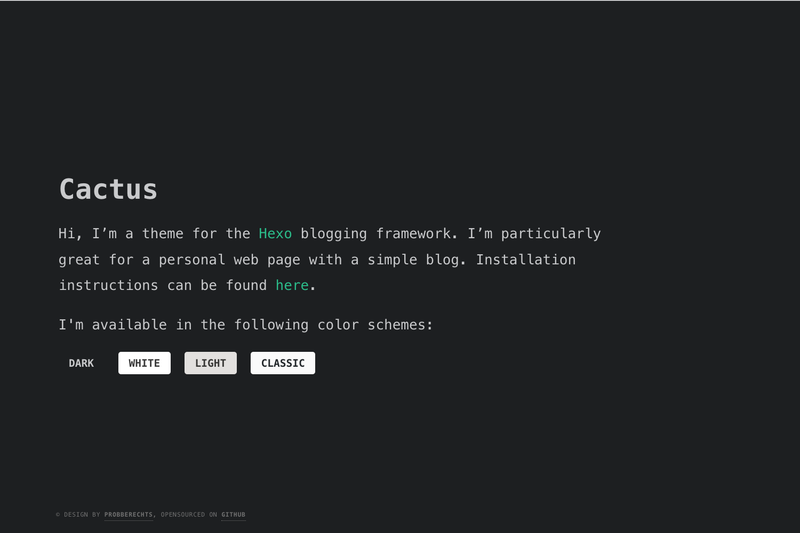
A responsive, clean and simple Hexo theme for personal websites with multiple color schemes, i18n, and comment support.
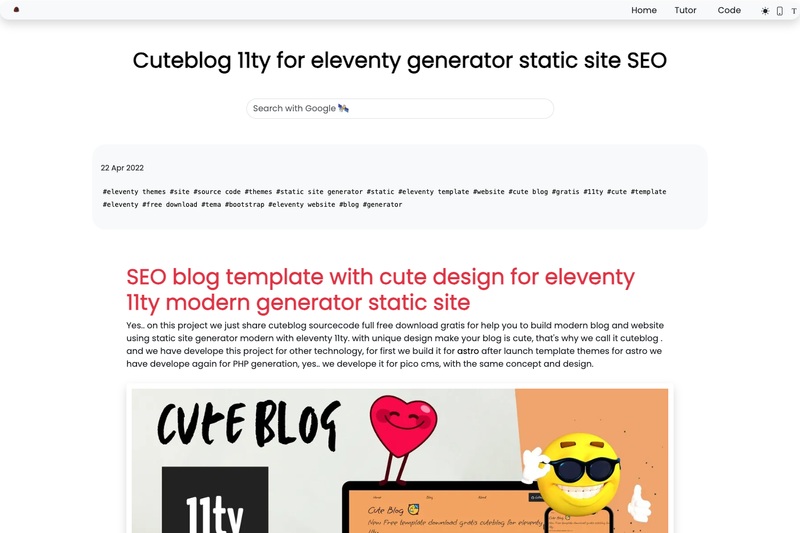
Cuteblog blog template for eleventy 11ty modern generator static site - Created with StackBlitz
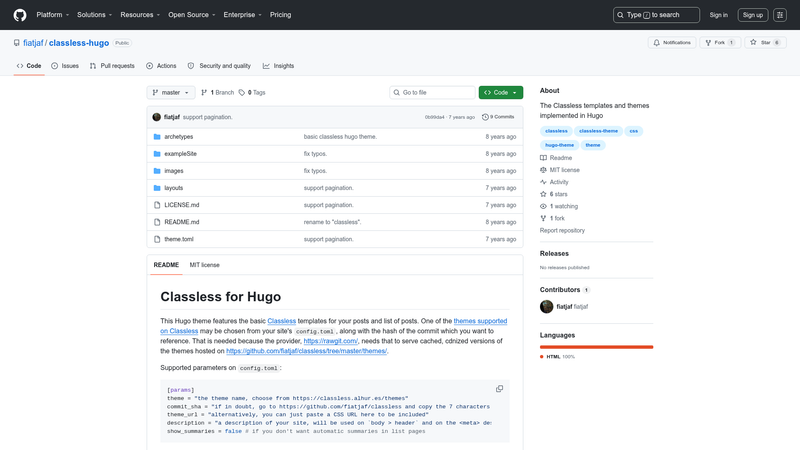
A Hugo theme that applies the Classless CSS templates, with theme selection via config.toml and optional per-post covers.
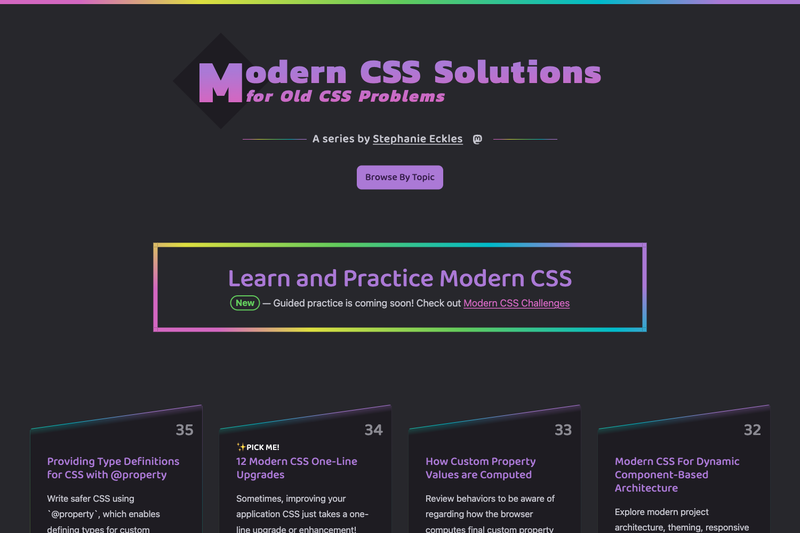
Posts from the series 'Modern CSS Solutions to Old CSS Problems' by Stephanie Eckles.
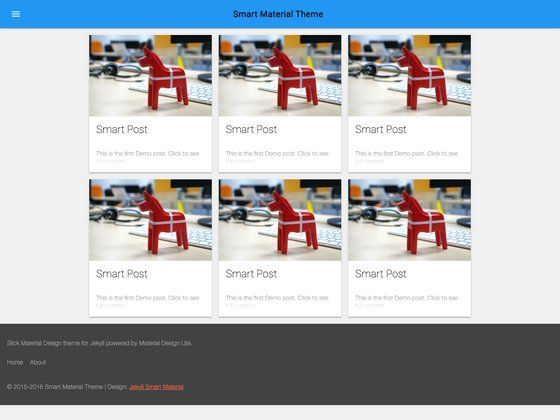
Material Design Lite-powered Jekyll theme for building Material Design-styled blogs and static sites.
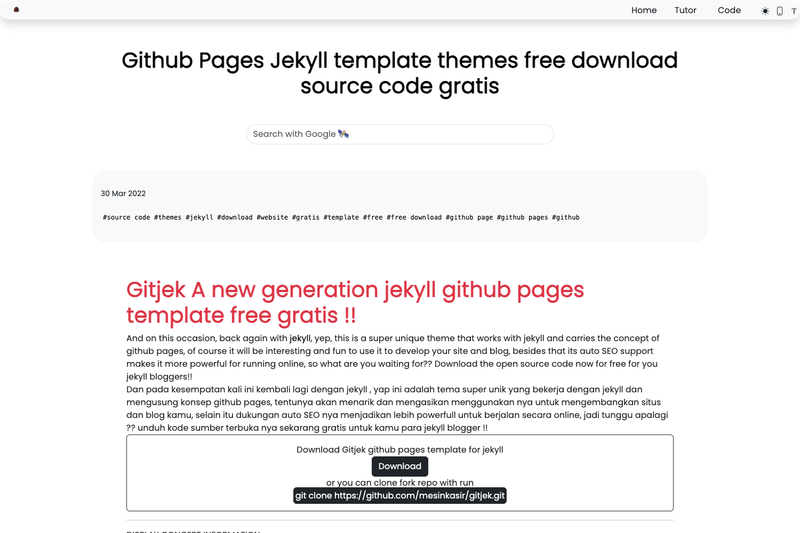
A free Jekyll blog theme for GitHub Pages with a clean home page, content area, and mobile-responsive design.
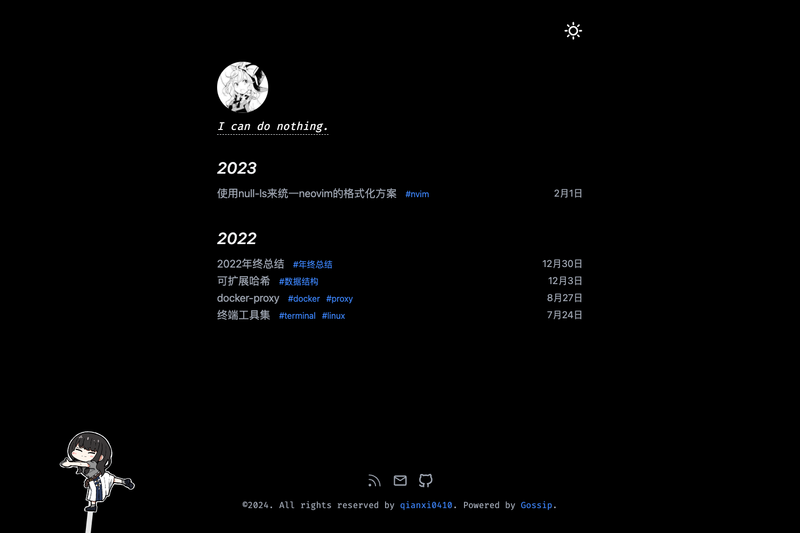
Cactus is a responsive, clean, and simple open-source Hexo theme for personal websites and blogs, providing a static site with four color schemes, 18 language translations, and built-in comment and analytics integrations.
Cactus is a Hexo theme developed by Pieter Robberechts and maintained on GitHub under the repository probberechts/hexo-theme-cactus. It runs on Hexo 3 or later and transforms standard Hexo Markdown posts and pages into a responsive static website. The theme is configured entirely through _config.yml files, either in the theme folder or centrally via theme_config in the site's main configuration file.
source/css/_colors.nav key in _config.yml, with optional labels for social links.type: search in its front-matter, and add it to navigation.source/_data/projects.json with entries containing a name, URL, and description to render project cards on the homepage.direction: rtl in _config.yml for Persian or Arabic; this also swaps the font to Vazir.cdn block.social_links block.theme: cactus in _config.yml and create posts with hexo new post "hello world".source/_data/projects.json with each project's name, URL, and description to display a list on the index page.hexo-generator-search, generate a search page, and link it in the menu to give readers full-text search.The theme is installed by cloning the repository into themes/cactus, then setting theme: cactus in the site's _config.yml. Content is added as Markdown files under source/_posts and source pages, using Hexo's standard hexo new commands. After running hexo generate and hexo server, the theme renders the site with the chosen colorscheme and navigation configuration.
theme_config in the site's _config.yml to set options like colorscheme: white without forking the theme.start_year and end_year in the copyright block; defaults to the current year.rss field accepts false to disable, a custom file name like atom.xml, or an empty value to defer to hexo-generator-feed._highlight folder and set it with highlight: COLORSCHEME_NAME.type: tags or type: categories to front-matter of pages created with hexo new page to generate overviews.Yes, Cactus is released under the MIT license, so it is free to use and modify, including for commercial projects.
Cactus version 3.0 requires Hexo 3 or later, and it has been tested in the demo hosted on GitHub Pages.
No. Cactus does not support multi-language sites. You must pick a single language via the language setting; translations are provided for 18 languages.
Yes, it supports Disqus and Utterances. You enable one by setting enabled: true and supplying the required configuration in _config.yml.
Create a new file in source/css/_colors with your palette, then set colorscheme to the file's name in _config.yml. The theme ships with dark, light, white, and classic.