Ghostwind is an open-source Tailwind CSS starter template that recreates the Ghost Casper theme as static HTML files, built by Tailwind Toolbox and released under the MIT license.
What is Ghostwind?
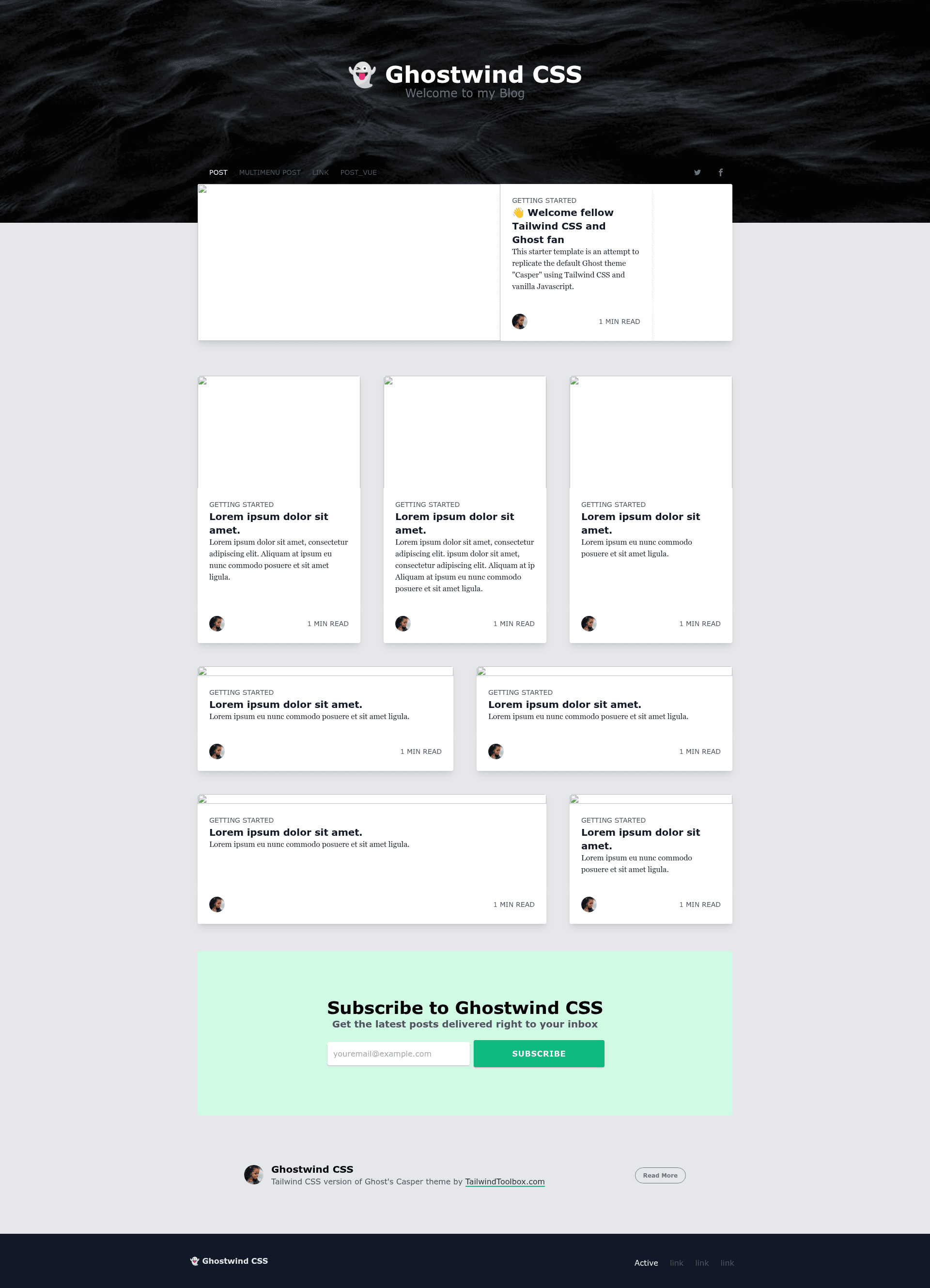
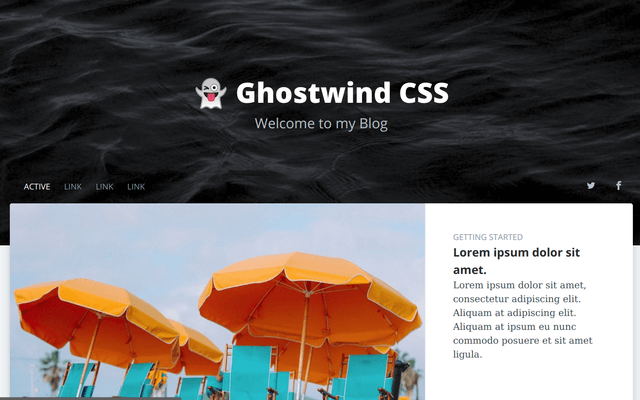
Ghostwind is a free, open-source blog template that clones the look of the Ghost publishing platform's default Casper theme using plain HTML and Tailwind CSS. It takes the Casper theme's visual design and implements it as two static pages — a homepage that lists blog posts and a single blog post page — with no JavaScript framework required. The template is maintained by Amrit Nagi through Tailwind Toolbox and Astrava.Solutions, and the code lives in the GitHub repository tailwindtoolbox/Ghostwind.
Key Features
- Tailwind CSS via CDN — The template uses a single HTML file per page that loads the Tailwind CSS framework from a content delivery network, so there is no build step or local installation needed to see it rendered.
- Homepage and post layouts — Two ready-made pages are included: an index page with a blog card layout and a full article page showing a cover image, title, meta, and body copy.
- Casper visual style — The design mirrors the Ghost Casper theme's signature centered header, large cover image, and serif article typography, so it looks like a Ghost blog without requiring Ghost.
- Vue version of the post page — A second post template (
post_vue.html) demonstrates how the same layout can be built with Vue, for developers who prefer an interactive JavaScript approach. - Dark mode variant — A community-maintained dark version is available at the chiptu/darkGhostwind repository, extending the template with a night-friendly color palette.
- MIT licensed — The code is released under the MIT license, so it can be freely used, modified, and incorporated into personal or commercial projects with attribution to the copyright holder.
- Hosting-ready static files — Because the output is plain HTML and CSS, the ready-to-preview files can be uploaded to any static host or opened directly from disk.
Who should use Ghostwind?
Ghostwind suits developers and designers who want a clean, editorial blog layout without the overhead of a full content management system. It is also a useful starting point for people learning Tailwind CSS who want to inspect a complete, themed implementation rather than a bare utility demo. Since the template ships as ordinary HTML, it is easy for beginners to copy the markup and swap in their own content, or for experienced developers to fork it and rebuild the styles with Tailwind's utility classes.
What can you do with Ghostwind?
- Static blog owners: Publish a minimalist portfolio or personal blog by editing the two HTML files and hosting them on any static site server, GitHub Pages, or Netlify drop.
- Tailwind CSS learners: Study how the utility classes compose the homepage and article pages, then experiment by changing spacing, colors, and typography directly in the HTML.
- Vue developers: Use the included
post_vue.htmlversion as a reference for converting a static Tailwind layout to a Vue-rendered component while keeping the same design. - Theme designers: Fork the repository and build a custom dark or branded variant, as the chiptu/darkGhostwind project demonstrates.
How does Ghostwind work?
The template is a set of static HTML files with a full CDN-hosted Tailwind CSS stylesheet linked in each page. To preview it, download the release archive or clone the GitHub repository, then open index.html and post.html in a browser. For customization beyond class tweaks, Tailwind Toolbox recommends following its setup guide to configure Tailwind locally so that the utility classes can be extended to match your branding.
Pricing
Ghostwind is free. The repository is open source and all code is released under the MIT license, so there are no license fees and no paid tier for the template itself.
FAQ
Is Ghostwind free?
Yes, Ghostwind is completely free. The template is open source and licensed under the MIT license, so you can use it for personal or commercial projects without paying anything or asking permission, as long as you preserve the copyright notice.
Does Ghostwind require the Ghost CMS?
No. Ghostwind only replicates the visual style of the Ghost Casper theme as static HTML. It does not depend on or connect to the Ghost platform. You can edit the files and host them anywhere that serves static pages.
How do I customize the colors and fonts?
Since the template loads Tailwind CSS from a CDN, you can override the default theme by editing inline style blocks or by downloading Tailwind and building a custom config. Tailwind Toolbox provides a setup guide to help you start tweaking properly.
Is there a Vue version?
A Vue version of the blog post page is included as post_vue.html, and the repository also lists it as a separate preview. Only the post layout has a Vue variant; the homepage is plain HTML.
Can I get a dark mode?
A community-maintained dark version is available from the chiptu/darkGhostwind GitHub repo. It is not part of the original Ghostwind release but can be forked and used as an alternative dark theme.