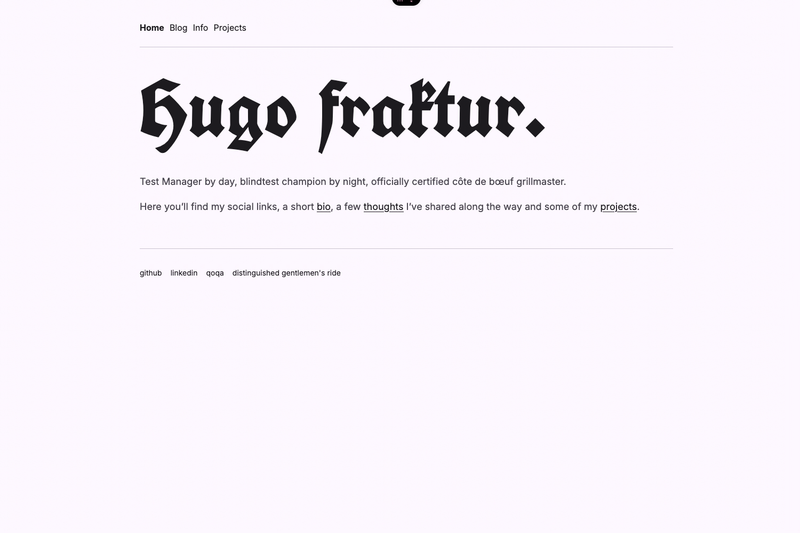
Hugo Fraktur Theme is a minimalist Hugo theme that pairs UnifrakturCook Fraktur headings with Inter body text to produce fast-loading, accessible blogs and personal sites with pagination and taxonomies intentionally disabled.
What is Hugo Fraktur Theme?
Hugo Fraktur Theme is a clean, modern theme built for the Hugo static site generator. It takes Markdown content and a config.toml as input and renders a static website with a distinctive Fraktur/Inter typography mix. Created by Nathan Buache, the theme is open source under the MIT license and comes with SEO, accessibility, and responsive design built in. A live demo is available at nathan.swiss.
Key Features
- Mixed Typography — H1 headings use UnifrakturCook Fraktur; H2, H3, and body text use Inter; fonts load via Google Fonts using the
googleFontsUrlparameter. - No Pagination — Post listings show all content on a single page, so there is no pagination complexity.
- No Taxonomies — Tags and categories are omitted; the config can disable taxonomy and term kinds entirely.
- Minimalist Layout — The design focuses on content with no sidebars or clutter.
- Responsive Design — Layouts adapt to all screen sizes.
- Fast Loading — Lightweight, optimized assets keep page loads quick.
- SEO Optimized — Includes meta tags, Schema.org markup, and Open Graph support.
- Accessible — Uses WCAG-compliant color contrasts and navigation.
Who is it for?
Hugo Fraktur Theme suits bloggers who want a distinctive serif-fraktur look without tag or category pages. Developers comfortable with Hugo can get a clean, fast, accessible theme and customize it via CSS variables. Personal site owners who like the minimalist aesthetic and want SEO out of the box will also find it useful.
What can you do with Hugo Fraktur Theme?
- Bloggers: Publish Markdown posts that appear on a simple, unpaginated home listing, and add Google Analytics or Plausible analytics through config parameters.
- Personal site owners: Showcase a short intro on the homepage with the
showIntroContentOnHomepageparameter, and add contact links viadata/social.json. - Design-conscious developers: Use the theme's CSS custom properties and font overrides to quickly reskin it without touching templates.
How does Hugo Fraktur Theme work?
The theme is installed into the themes directory via git submodule, git clone, or direct download. After installation, you set theme = "hugo-fraktur-theme" in config.toml, optionally disable taxonomy and term kinds by setting disableKinds = ["taxonomy", "term"], and configure display options like showIntroContentOnHomepage or showPostsOnHomepage. You can also add social links by editing data/social.json and override design tokens in assets/css/extended/custom.css.
Pros and cons
- Pros: Distinctive typography, no pagination/taxonomy clutter, lightweight and fast, SEO and accessibility built in, MIT license.
- Cons: No native tag or category support by design; customization requires familiarity with CSS custom properties and Hugo configuration.
Pricing
Free and open-source under the MIT license.
FAQ
Is Hugo Fraktur Theme free?
Yes, Hugo Fraktur Theme is free and released under the MIT license, so you can use, modify, and redistribute it.
Does Hugo Fraktur Theme support tags and categories?
No. The theme intentionally omits taxonomies and pagination to keep the site clean. You can disable taxonomy and term kinds in Hugo configuration, and the theme does not generate tag or category pages.
How do I change the fonts or colors?
Edit assets/css/extended/custom.css and override the CSS custom properties defined by the theme. Font family variables include --font-family-heading, --font-family-paragraph, and --font-family-monospace.
Which fonts does Hugo Fraktur Theme use?
H1 headings use UnifrakturCook Fraktur, while H2, H3, and body text use Inter. Both are loaded from Google Fonts by default, and you can change the URL in the googleFontsUrl parameter.
Can I use analytics with this theme?
Yes. The theme supports Google Analytics via the google_analytics_id parameter and Plausible Analytics via plausible_analytics_domain.