Newsletter
Join the Community
Subscribe to our newsletter for the latest news and updates

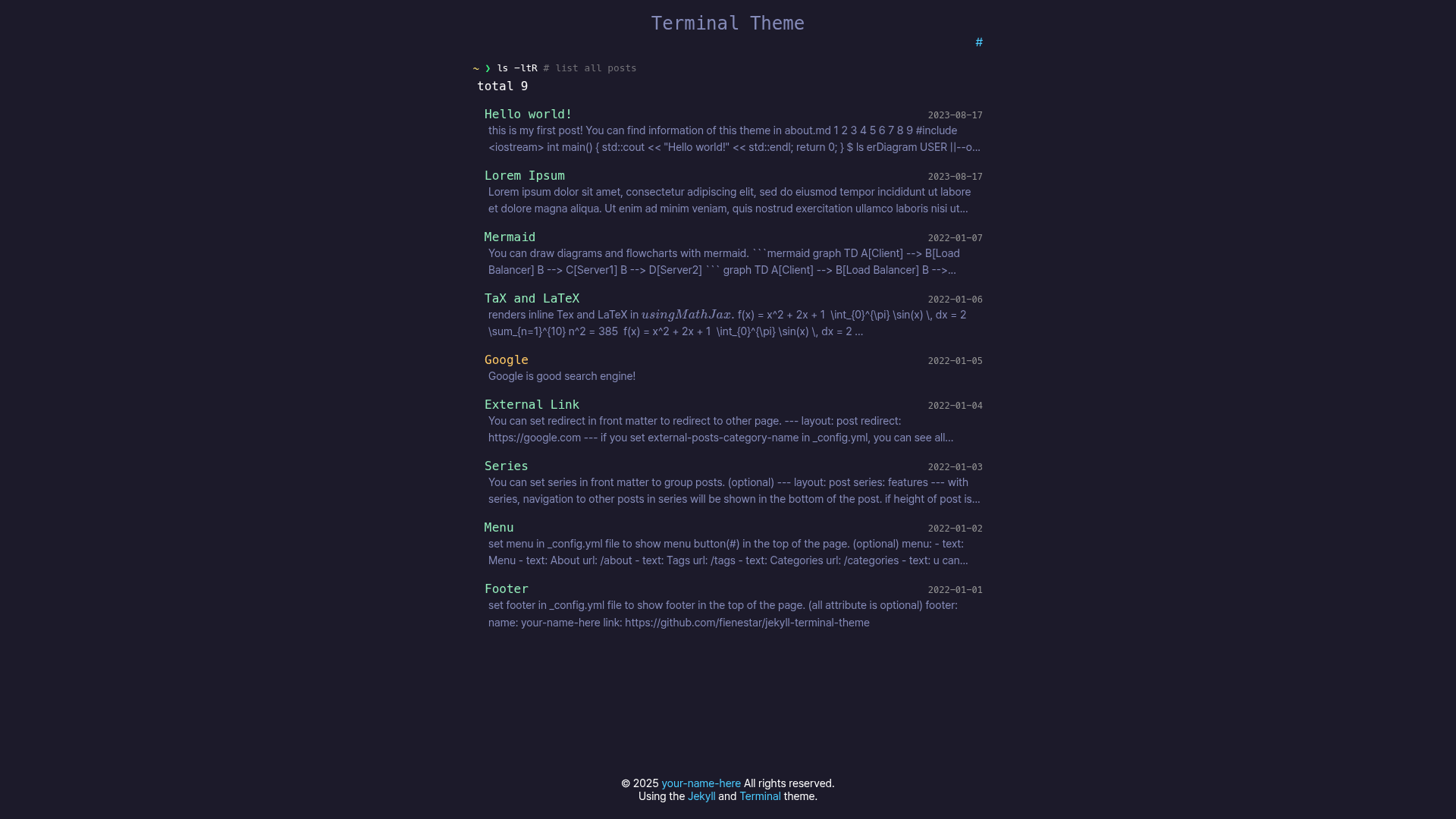
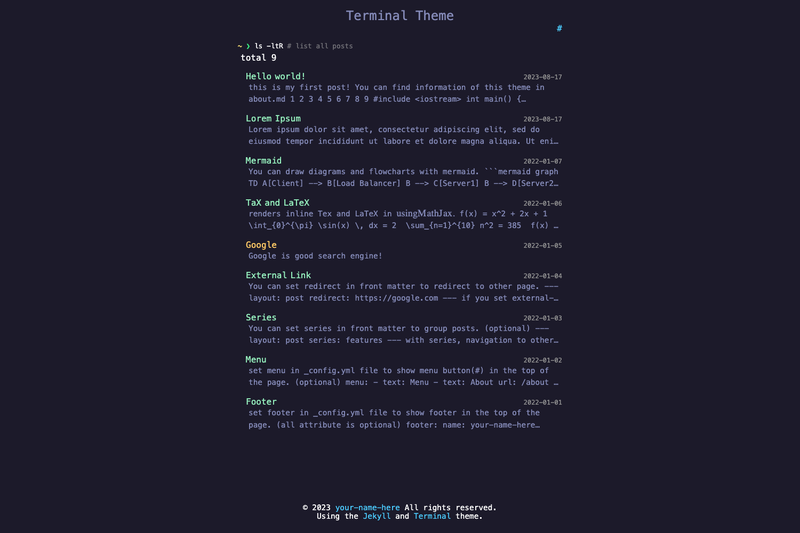
A Jekyll theme with a terminal-style interface for blogs and portfolios, built by fienestar.
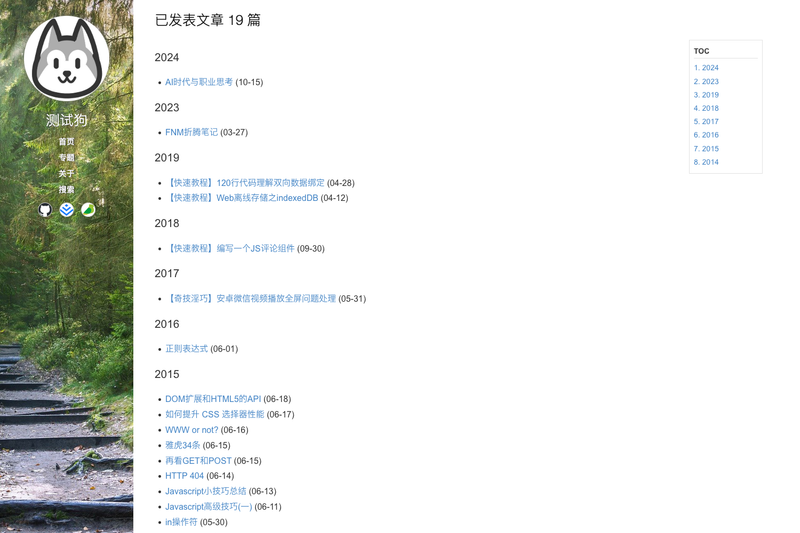
A simple, fast Hexo blog theme with site search, categories, RSS, and Valine comments, ported from Octopress.
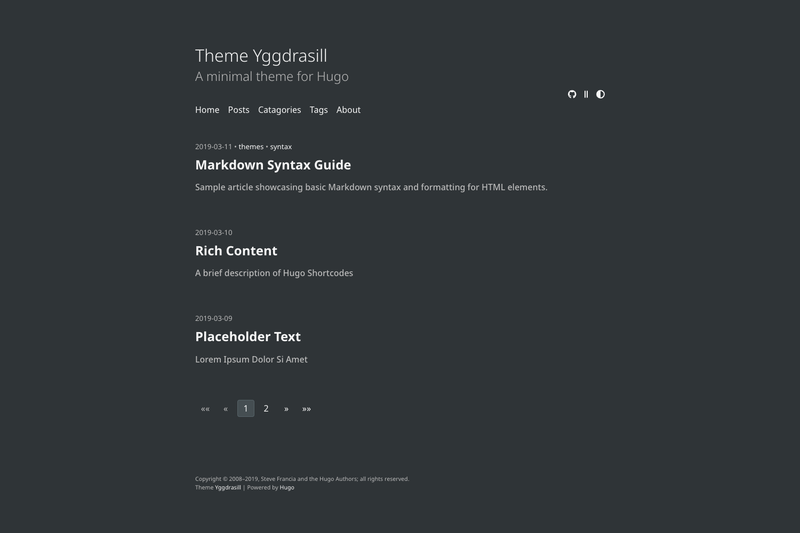
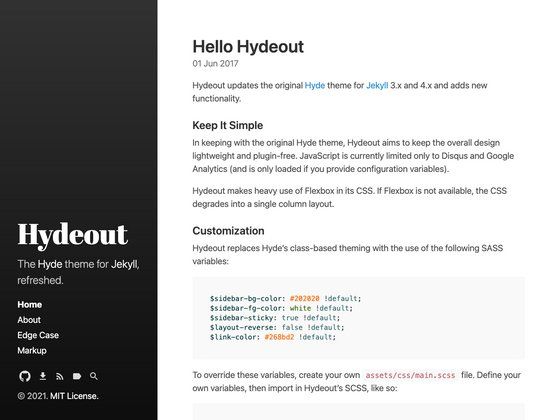
A minimal Hugo theme for clean, content-focused static websites.
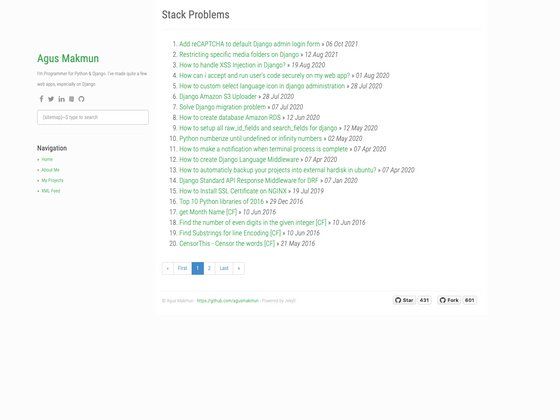
Free and open-source Jekyll theme for blogs and portfolios with realtime search, related posts, Disqus, and project pages.
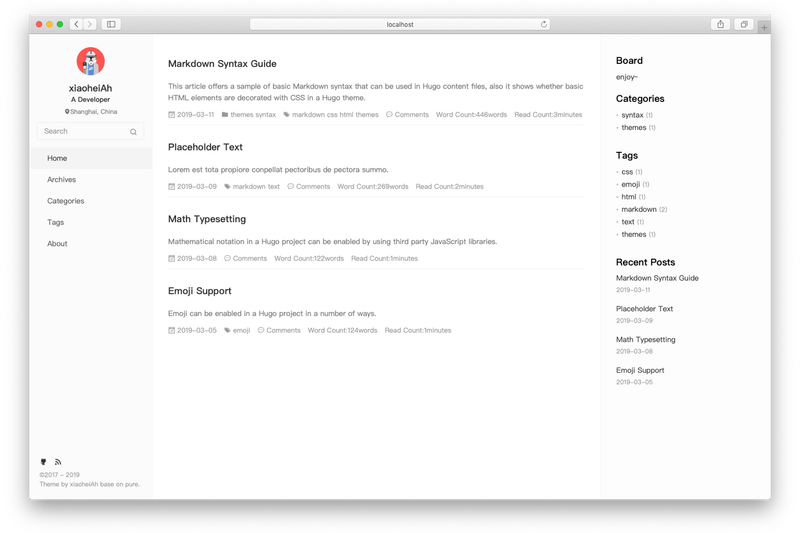
A clean, powerful Hugo blog theme ported from hexo-theme-pure, with five color skins and built-in i18n.
Jekyll Terminal Theme is a Jekyll-powered static site theme that wraps a personal blog or portfolio in a terminal-style interface, created by the GitHub user fienestar for their own use.
Jekyll Terminal Theme is a free, open-source Jekyll theme that renders your Markdown content into a static website with a command-line-terminal look. It takes standard Jekyll content (posts and pages in Markdown) and outputs static HTML, leveraging Jekyll's Liquid templating system. The theme is hosted on GitHub, tagged with the jekyll-theme topic, and includes a live demo at https://fienestar.github.io/jekyll-terminal-theme/.
bundle install and bundle exec jekyll serve.jekyll-theme topic, so you can fork and modify it.bundle exec jekyll serve, and publish a terminal-styled site.The theme follows the standard Jekyll workflow. After obtaining the repository (e.g., by cloning or downloading it), you install the required Ruby gems with bundle install, then start a local server with bundle exec jekyll serve. Jekyll compiles the Markdown content into a static site with the terminal look in the _site folder, which you can then deploy anywhere.
Yes, the theme is open source and available on GitHub. There is no pricing mentioned in the repository, and you can clone and use it for personal or commercial projects, subject to any license file in the repo.
Run bundle install from the theme's directory to install dependencies, then run bundle exec jekyll serve to start a local development server. After that, visit the local URL (usually http://localhost:4000) to preview the site.
Yes, as a Jekyll theme, it is compatible with GitHub Pages. The demo itself is hosted on GitHub Pages, and you can push your fork or the theme to a GitHub repository to have Pages build it automatically.
The theme was created by GitHub user fienestar, who describes it as a "terminal theme for me." The repository has received 5 stars on GitHub, suggesting a small but real audience.