Next.js + GraphQL + TypeScript Boilerplate is a GitHub template that preconfigures a Next.js project with GraphQL and TypeScript so you can start building without wiring up the stack yourself.
What is this template?
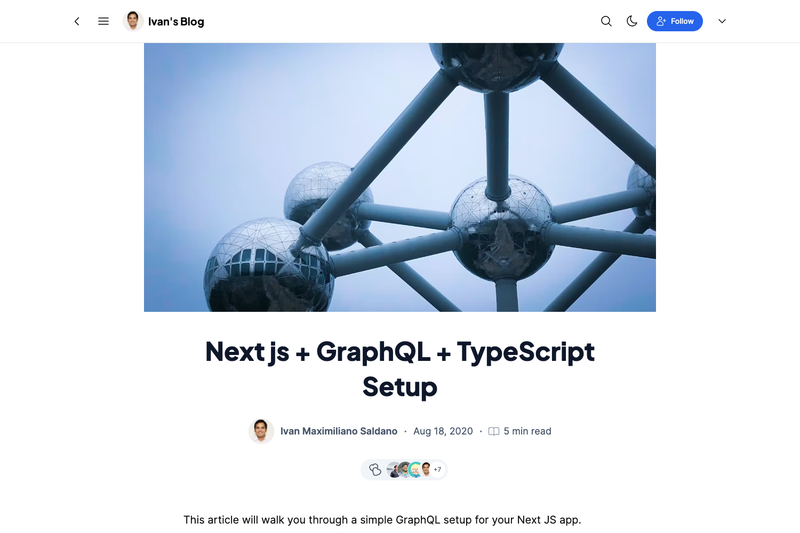
This is a boilerplate for Next.js that combines the Next.js React framework with GraphQL for data fetching and TypeScript for static typing. Its repository description reads "GraphQL + TypeScript boilerplate for NextJS." A Hashnode article by ivanms1, linked from the page, explains how to create this template step by step. After cloning the repository, running npm run dev or yarn dev starts the development server on localhost:3000. Vercel appears in the repository's GitHub topics, so the project is positioned for deployment to that platform.
Key Features
- Next.js framework — Built on Next.js, giving you file-based routing, server-side rendering, and API routes out of the box.
- GraphQL integration — The boilerplate includes GraphQL setup for querying data, per the repository description.
- TypeScript support — TypeScript is preconfigured, so your code is type-checked and editor autocompletion works from the first run.
- React components — Uses React for the UI layer, as Next.js pages are written as React components.
- Vercel deployment — Vercel appears in the repository topics, indicating the project is intended for deployment to that platform.
- Two package managers — Both
npm run devandyarn devare listed as valid commands to start the development server. - Learning resource — A linked Hashnode article by ivanms1 explains how to set up this stack step by step.
Who is it for?
- Developers starting a new Next.js project — Use this template to skip the initial configuration of GraphQL and TypeScript.
- Teams standardizing on a GraphQL stack — The boilerplate gives a consistent starting point for projects that use GraphQL APIs.
- Developers learning the stack — The linked tutorial shows how the pieces fit together, making it useful for studying Next.js, GraphQL, and TypeScript integration.
What can you do with it?
- Prototype a GraphQL-backed app — Spin up a Next.js app with TypeScript and GraphQL and immediately start building pages.
- Deploy to Vercel — Since Vercel is listed as a topic, the template is set up for straightforward deployment to that platform.
- Study a minimal stack — The blog post by the author documents every step, so you can learn how to wire the stack manually if you prefer.
How does this template work?
The README instructs you to run npm run dev or yarn dev, which launches the Next.js development server. After that, open http://localhost:3000 to see the default page in your browser. As a standard Next.js application, the template supports hot reloading during development.
FAQ
How do I run the template?
Run npm run dev or yarn dev from the project directory, then open http://localhost:3000 in your browser to see the result.
What stack does this template use?
It uses Next.js as the framework, GraphQL for data querying, and TypeScript for static typing. The repository description states "GraphQL + TypeScript boilerplate for NextJS."
Who created this template?
The repository's linked Hashnode article is authored by ivanms1, indicating the template is created by that developer.
Does it support deployment to Vercel?
Vercel appears in the repository topics, which suggests the project is configured for deployment to Vercel, a common hosting platform for Next.js apps.
Is this template popular?
The GitHub repository has 16 stars, a modest but real signal of interest from the developer community.