Newsletter
Join the Community
Subscribe to our newsletter for the latest news and updates
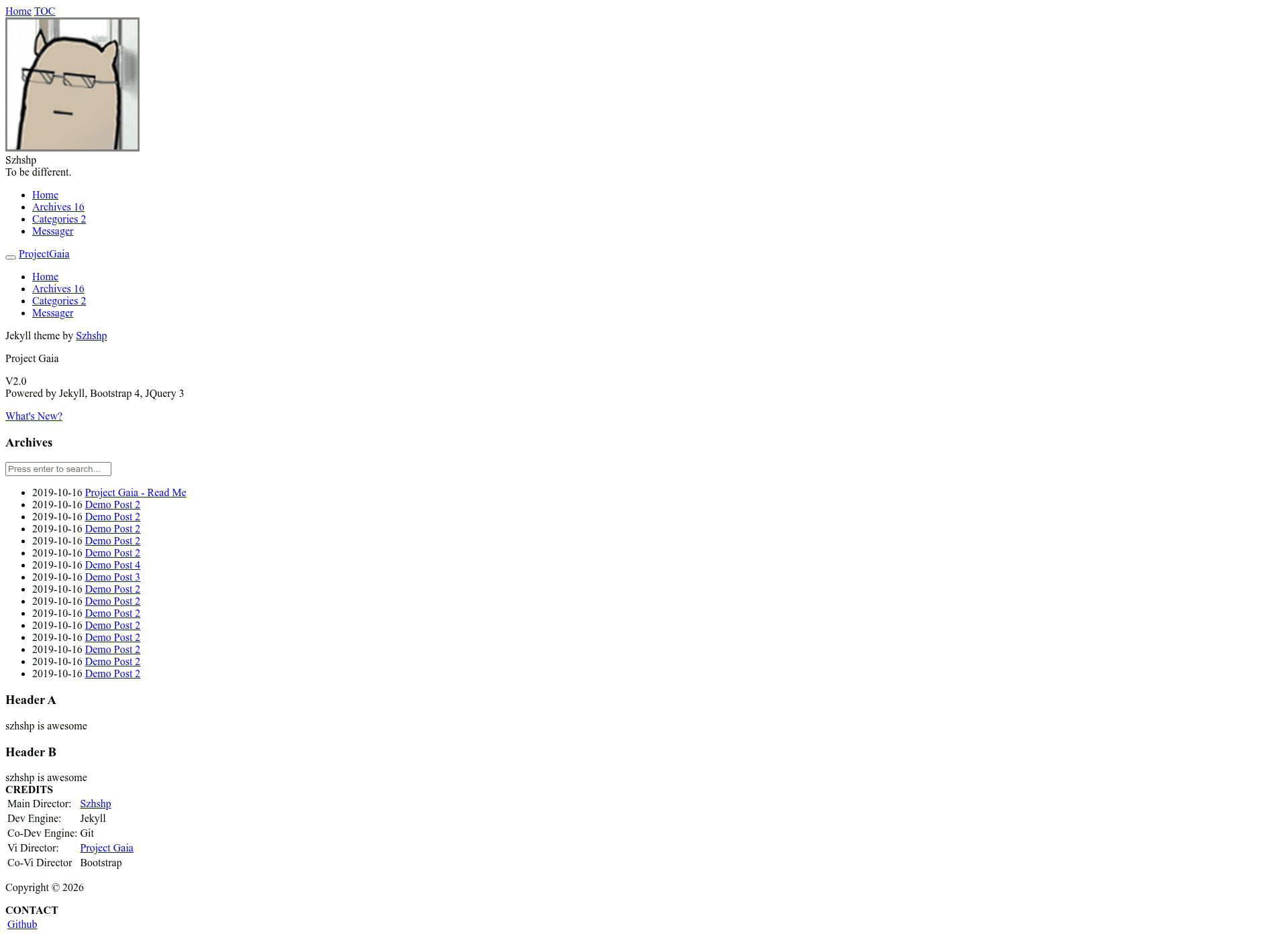
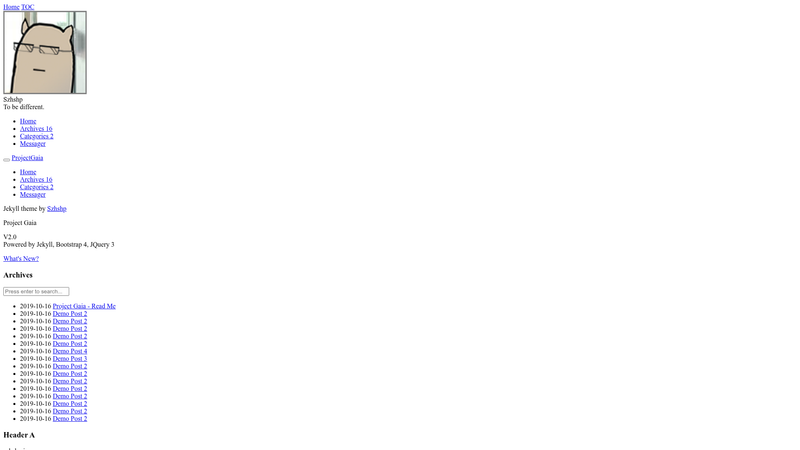
Jekyll blog theme with sidebar, TOC, search, lightbox, and reading progress bar, built on Bootstrap 4 and jQuery 3.
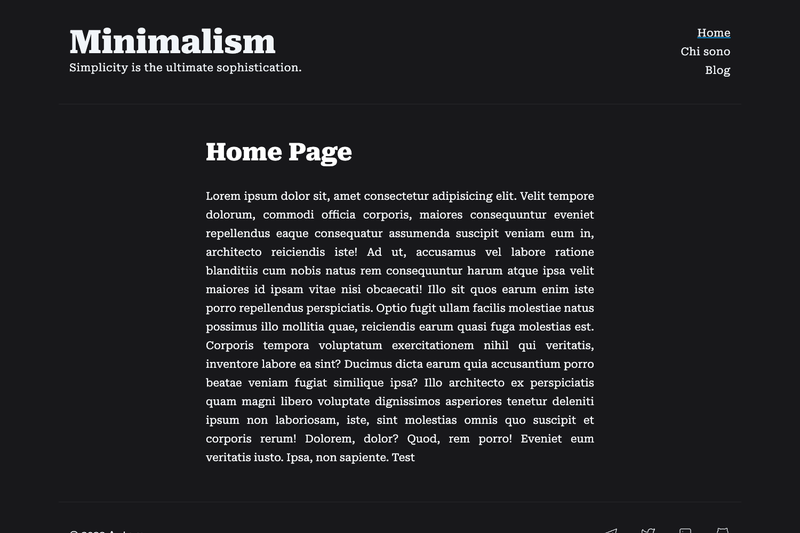
Eleventy starter with PWA, Tailwind CSS, SEO, blog, RSS, sitemap, and dynamic social images.
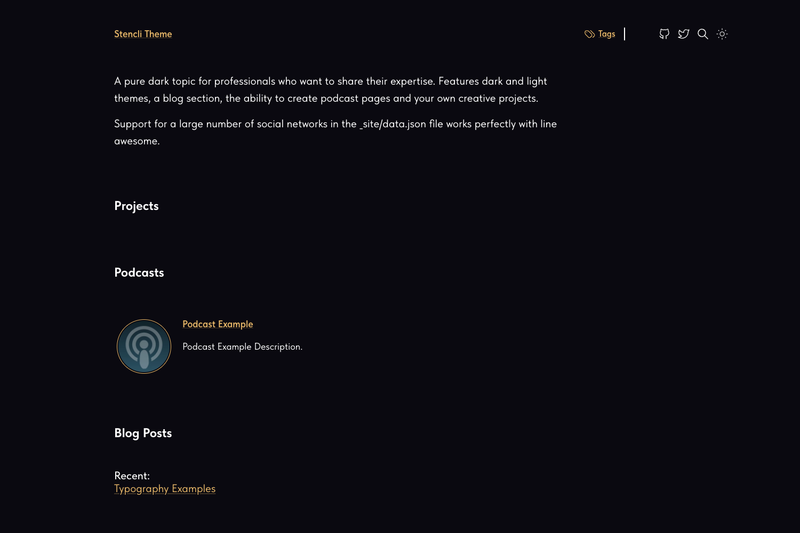
A minimal, JavaScript-free Eleventy blog starter with Tailwind CSS, dark mode, tags, RSS, and sitemap.
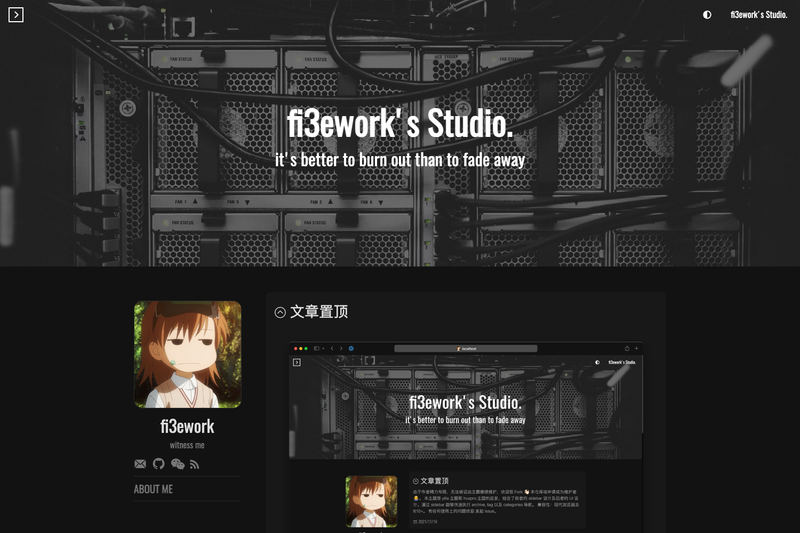
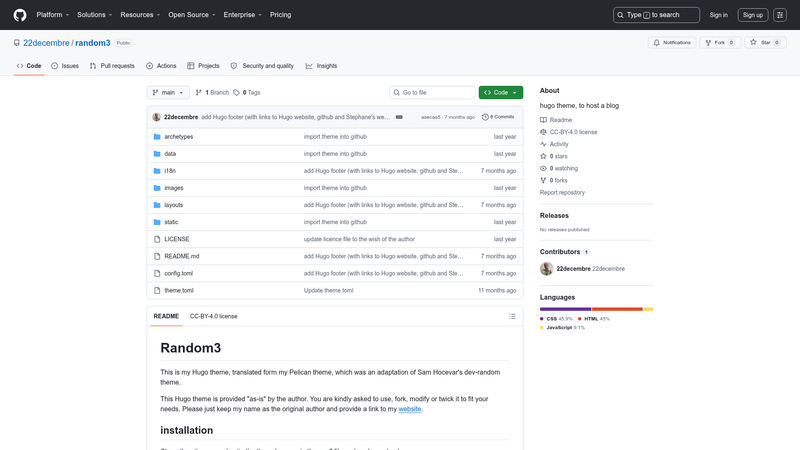
A modern Hexo blog theme with a sidebar for archives, tags, and categories, plus optional Mermaid, LaTeX, and word count.

Minimalist Hexo blog theme with vanilla JS, Less styling, article expiry warnings, reading progress, and multiple comment systems.
Project Gaia is a Jekyll-based blog theme that turns Markdown posts into a styled static website with a sidebar, table of contents, search, lightbox, and reading progress bar. It runs on GitHub Pages via Jekyll, is developed by szhielelp, and uses Bootstrap 4-Alpha and jQuery 3. Version 2.0 was released as beta on Oct 18th 2019.
Project Gaia is a Jekyll blog theme with a sidebar layout, table of contents, search, lightbox, and reading progress bar, built on Bootstrap 4 and jQuery 3. It takes Markdown posts as input and generates a static HTML site suitable for GitHub Pages. The theme is created by szhielelp and is open source under the MIT license.
As a Jekyll theme, you add your Markdown posts to a Jekyll project, configure the theme, and build the site. Jekyll generates the static HTML pages that you can deploy to GitHub Pages. The theme's plugins handle TOC, search, and lightbox.
Yes, the theme is open source under the MIT license, with an additional Anti 996 license badge. You can use it freely on personal and commercial projects.
The repository is no longer maintained. The author recommends migrating to Project Titan, a Next.js version with Material UI and TypeScript that retains the same visual styles.
It uses Bootstrap 4-Alpha and jQuery 3, rebuilt in February 2017. It also integrates a syntax highlighter and a reading progress bar.
Yes, the author states you can migrate seamlessly, and a 5-step guide is available at the Project Titan documentation site.