Newsletter
Join the Community
Subscribe to our newsletter for the latest news and updates

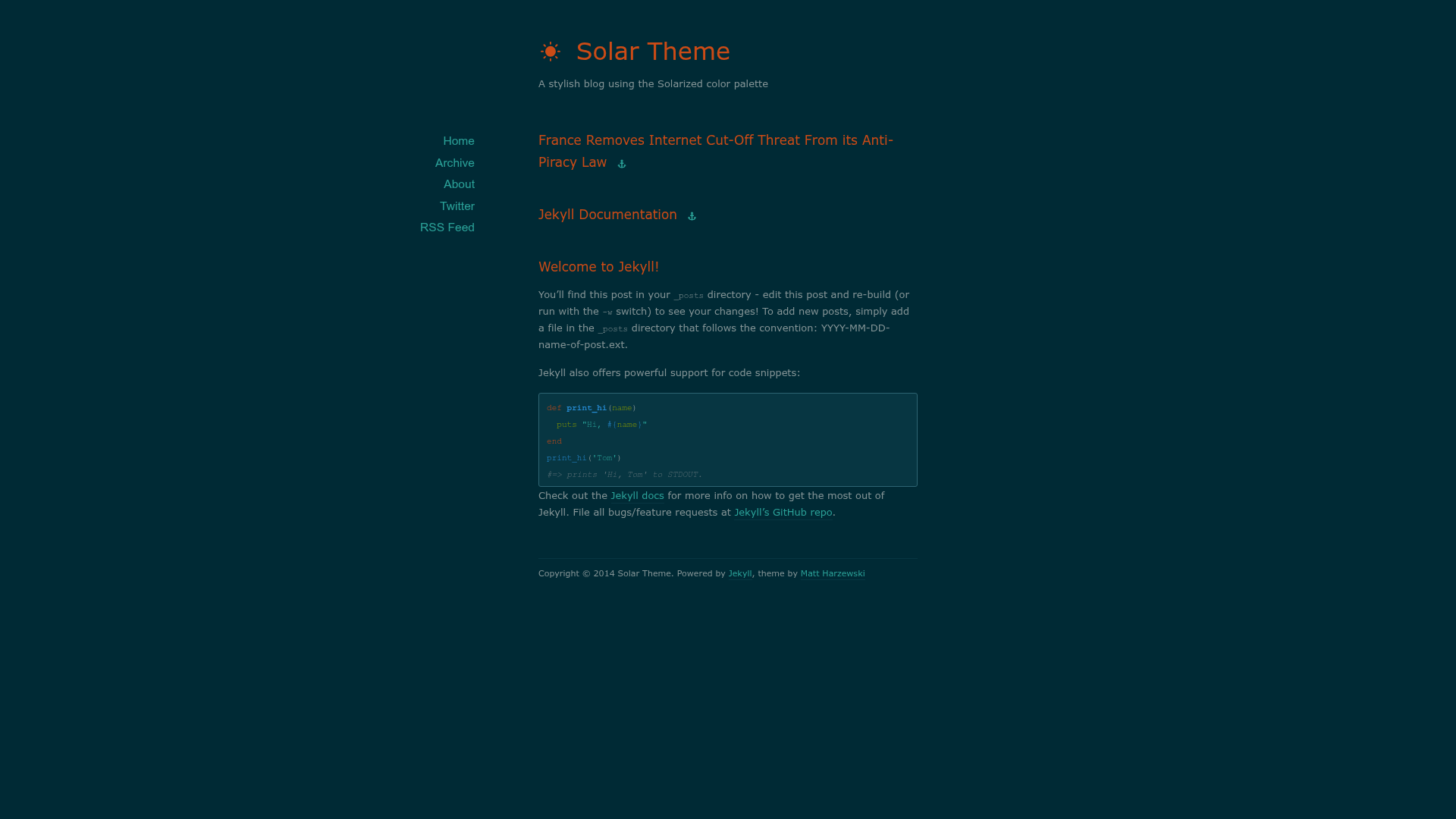
A stylish theme for Jekyll blogs, based on the Solarized color palette.

Eko's website and blog built with Eleventy, featuring Netlify CMS and config-driven product pages.
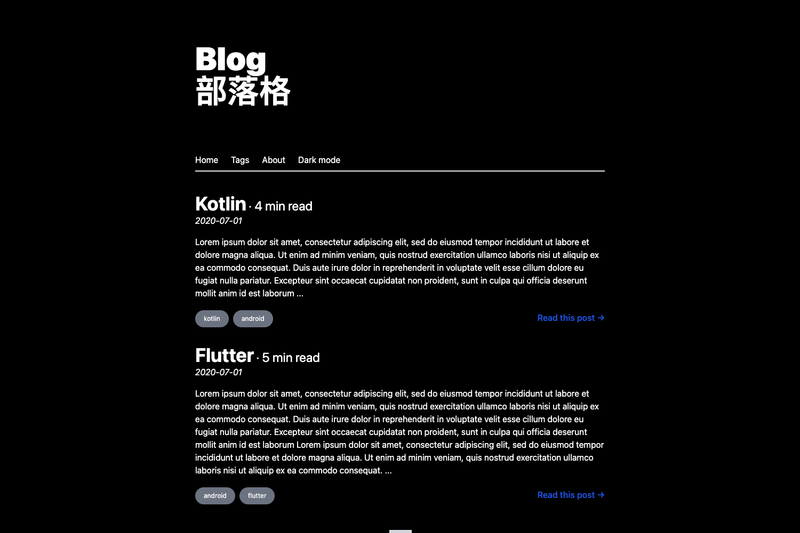
Eleventy v3 + Tailwind CSS v4 blog starter that works with JavaScript disabled.

Derrick is a clean, minimal, and fast Jekyll theme for a personal blog, with Disqus comments, Google Analytics, and post sharing.
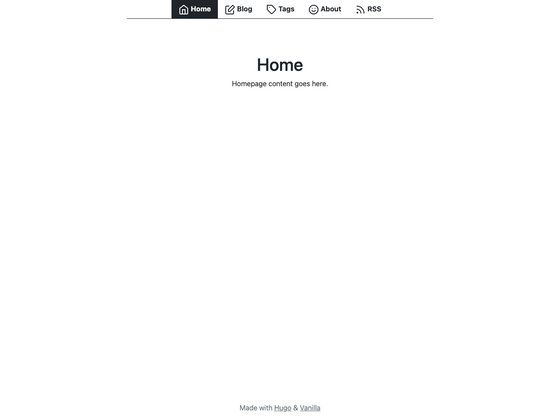
A vanilla Hugo theme built on Bootstrap 4.3 with shortcodes for blockquotes, tables, and image cards.
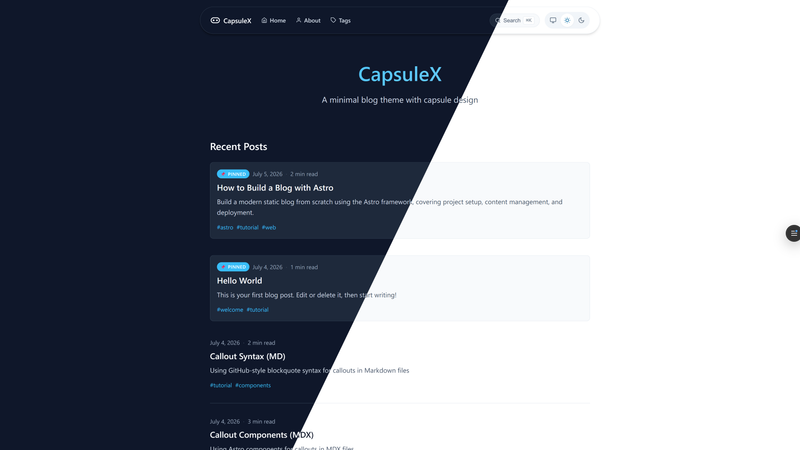
A minimal blog theme for Astro with capsule floating navigation and modern design.
Solar is a Jekyll blog theme that applies the Solarized color palette to a lightweight, responsive Jekyll layout. It is designed for bloggers who want a distinctive, low-contrast aesthetic without building their own templates.
Solar is a free, open-source theme for Jekyll static sites, built specifically for blogging. It takes standard Jekyll posts written in Markdown and renders them into a blog with either Solarized Dark or Solarized Light colors. The theme was created by Matt Harzewski (redwallhp on GitHub) and is released under the GPLv2-or-higher license. The repository includes layout templates, an assets folder, an RSS feed, and an index page, along with demo content.
colors-dark.css to colors-light.css to toggle the entire site between the two palettes.external-url field to a post's YAML front matter turns the post title into a hyperlink to that external address.git clone https://github.com/redwallhp/solar-theme-jekyll.git gives a complete blog starter with pages and config ready to edit._layouts, archives, assets, feed.xml, and index.xml rather than replacing the whole site.external-url front matter field to turn each post into a link post._config.yml, and publish a Jekyll blog that is already styled and responsive.external-url YAML key to any post and the theme automatically renders it as a link post, saving you from writing custom HTML.Solar works like any standard Jekyll theme: Jekyll processes Markdown posts and Liquid templates from the _layouts directory, then applies the Solarized CSS in assets to produce a static HTML site. To install, either clone the repository and customize it, or copy the specific files (_layouts, archives, assets, feed.xml, index.xml) into an existing Jekyll project and compare your _config.yml with Solar's.
Yes, Solar is released under the GPLv2 or higher license, so it is free to use, modify, and distribute. There is no paid tier or upgrade.
Yes. Add external-url: http://example.org to a post's YAML front matter and Solar will turn the post title into a link to that external URL.
Yes, the theme's demo is hosted on GitHub Pages, and it runs on the standard Jekyll environment used by GitHub Pages.
In the theme's HTML template, change the reference from colors-dark.css to colors-light.css. That single swap changes the whole site's palette.