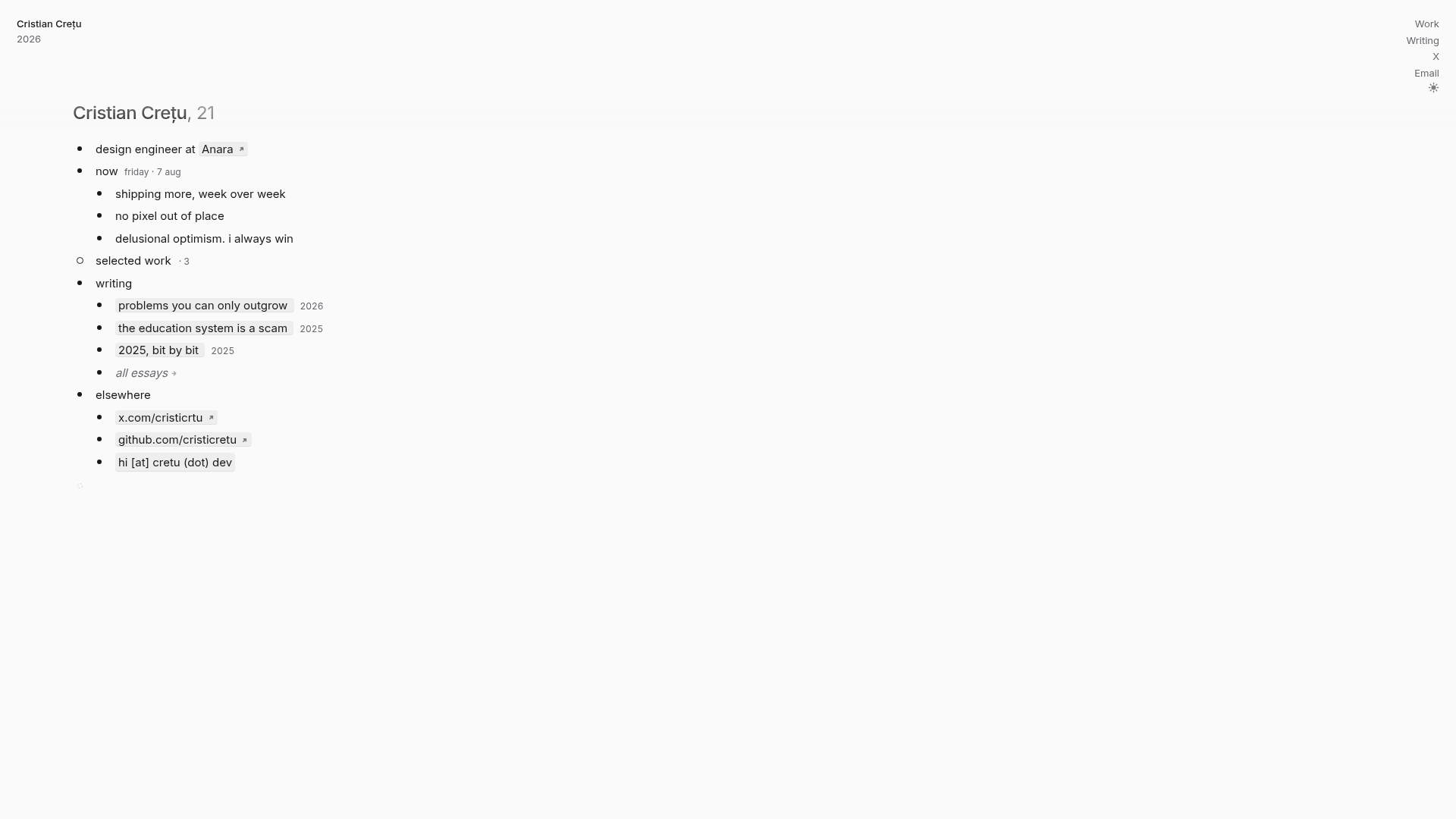
cretu.dev is an open-source personal website template built with the Astro static site generator, designed to ship a fast personal homepage with keyboard-driven navigation and hidden easter eggs.
What is cretu.dev?
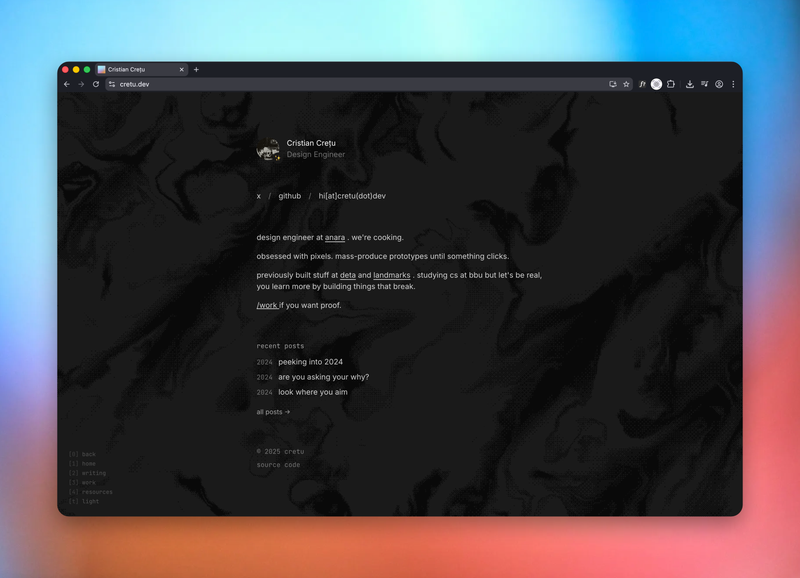
cretu.dev is a personal website and portfolio template built on the Astro framework. It takes Markdown and MDX content and generates a static site styled with Tailwind CSS, with sections for a blog and project showcase. The repository is open sourced under the MIT license — the page itself states "mit. do whatever" — so you can freely use, modify, and redistribute it. It is the personal site of its developer and is deployable to static hosts such as Cloudflare.
Key Features
- Astro static generation — The site is built with Astro, which produces static HTML pages with no JavaScript by default for fast loading.
- Tailwind CSS styling — Tailwind CSS is used for the design, as confirmed by the repository's
tailwindcsstopic tag. - Keyboard navigation — A distinct interaction lets visitors press numbers 1 through 4 to jump between the site's main sections.
- Hidden easter eggs — The page mentions the Konami code, hinting at a secret feature visitors can trigger.
- Blog support — The repository is tagged
blog, indicating it includes a blog for publishing articles. - Portfolio showcase — The
portfolioandportfolio-websitetags point to built-in sections for presenting projects. - MIT license — The license lets you reuse the code without restrictive terms, per the "do whatever" note.
Who is it for?
This template is aimed at developers who want a clean Astro-based personal site without starting from scratch. Bloggers can use the built-in blog structure to publish markdown posts. Freelancers and designers can present their work in the portfolio sections. It also serves as a compact reference project for anyone learning Astro, Tailwind CSS, and static site deployment.
What can you do with cretu.dev?
- Developers: Clone the project and run
pnpm i && pnpm devto launch a local development server and start customizing the Astro components. - Bloggers: Write articles in Markdown and have them rendered into the site's blog section automatically.
- Freelancers: Showcase project case studies in the portfolio area and deploy the finished site to Cloudflare for fast global delivery.
- Learners: Study the small codebase to understand how Astro components, Tailwind utilities, and static deploy targets fit together.
How does cretu.dev work?
The quick start shown on the page is pnpm i && pnpm dev. That installs the project dependencies and starts the Astro development server. After editing content and styles, you run the Astro build command to generate a fully static output folder, which can be uploaded to any static host. The repository's Cloudflare topic suggests deployment via Cloudflare Pages or Workers is a supported path.
FAQ
Is cretu.dev free?
Yes. The project is open source under the MIT license, as indicated by the "mit. do whatever" statement on the page, so you can use and change it without paying license fees.
What technology stack does cretu.dev use?
It relies on the Astro framework for static site generation and Tailwind CSS for styling. The repository topics also list Cloudflare for hosting and Highlight for code syntax highlighting.
Does cretu.dev include a blog?
Yes, the repository is tagged blog, and the site structure is designed to support publishing written articles.
How can I run cretu.dev locally?
Clone the repository, then run pnpm i to install dependencies and pnpm dev to start the development server, exactly as stated in the project's code block.
Can I deploy cretu.dev to Cloudflare?
The repository includes a cloudflare topic tag, indicating that Cloudflare is a supported deployment target. Build the static site with Astro, then upload the output to Cloudflare Pages or your preferred static hosting service.